Anyone can build with AI now. That was never the hard part.
AI will get a system seventy-five percent of the way there. The last twenty-five percent is where businesses get hurt: security, data handling, compliance, and architecture that holds up after the demo is over. I spent 25 years as the operator who had to answer for software when it failed, including leading a healthcare product to SaaS under HIPAA. Now I build it myself, and I build it to hold.
Scaling: IHG • Choice Hotels • Scooter's Coffee • Hawaiian Bros • 17 locations operated • Midwest Roots • Global Systems
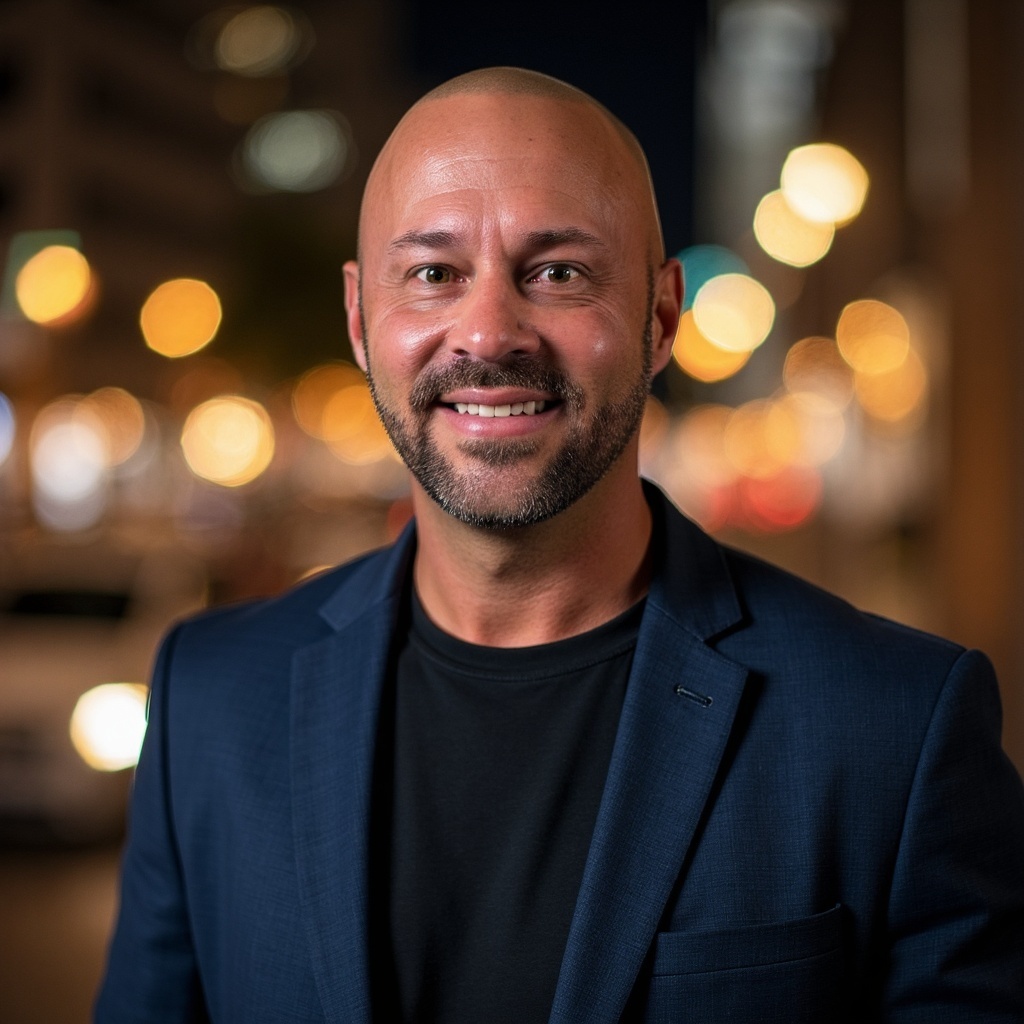
The last 25%.
A capable teenager with an AI assistant can build you a working automation this weekend, and it will demo beautifully. That is the easy seventy-five percent. What it will not have is any answer to the questions that decide whether it belongs in a real business.
Access and security
Who can reach the data, and what is exposed when something is misconfigured. Most AI builds leak through a credential nobody thought about.
Where your data goes
What leaves your walls, which vendors retain it, and what a model provider keeps. This is the question that ends deals during a security review.
Compliance and governance
Approval workflows, audit trails, and controls that stand up when somebody asks who approved what. I have built under HIPAA. I know what the questions sound like.
Architecture that scales
Whether it still works at ten times the volume, or quietly breaks in the month it matters most. Prototypes are built to demo. Systems are built to hold.
Failure behavior
What happens at two in the morning when it breaks, who finds out, and what it refuses to do when it is not sure. An automation that fails loudly is safe. One that fails silently is not.
Ownership
Your code, your accounts, your data, and no dependency on me. If we part ways you lose nothing but me.
None of this shows up in a demo. All of it shows up eventually.
I have been on both sides of this.
Most people who can build this have never carried a P&L. They have never sat in front of a board explaining an outage, never been the name on a compliance failure, never had to tell four hundred people that the system they depend on is down. They build what was asked for and hand it over, and the risk becomes somebody else's problem.
Most people who do understand that risk cannot build.
I ran a $400M district and held two COO seats. I led the developers, sysadmins, and support teams that moved a healthcare product from client-server to SaaS under HIPAA. I have signed the checks, run the demos, sat through the roadmap calls, and been the one who had to answer when the software did not do what it promised. Now I write the code myself.
That combination is the whole thing. Someone can learn to build with AI in a month. Nobody can shortcut twenty-five years of being accountable for what happens next.
I've Been on Your Side of the Invoice.
Tired of paying your IT company every month and having no idea what they actually do or where the money goes? Paying for software you never use? Emailing for support and hearing nothing back for days? I've been there. I've run the businesses, signed those invoices, and felt every one of those frustrations. That is exactly why I do things differently:
- A written response policy. Four hours, not four days.
- Resolved in 24 hours or that month's care fee is credited. In writing.
- Scope and price agreed in writing before I start. No hourly meter, no surprise invoices.
- You own everything. Your site, your data, your accounts, even if we part ways.


The Short Version
Most business software is built by people who've never run a business. They've never made payroll, closed a month, or watched a deal evaporate overnight. I spent 25 years on the other side of that software, and then I got tired of waiting on it.
I became a dad at 22 and a Walmart manager the same year. By 25, I was one of the youngest GMs in Best Buy history. From there I served as COO of Future Health, a healthcare software company later acquired by ChiroTouch, where I led the developers, sysadmins, and support teams that moved a client-server product into SaaS. I then joined an HR consulting firm (Creative HR Solutions) as a Partner, and was eventually recruited as the Chief Operating Officer of a turnkey hotel construction company, where I built and launched our own FF&E company with a global supply chain. I survived a 35% overnight tariff hit on goods at sea, and a $50M hospitality deal that vanished the night the world shut down (COVID). Today, through BraveHart Development, my partners and I operate 15 Scooter's Coffee and 2 Hawaiian Bros locations across three states. We also developed two hotels, the Sleep Inn & MainStay Suites in Franklin, Wisconsin and the Holiday Inn Express in Marion, Iowa, which Hart Family Hotels manages.
In every one of those seats, the bottleneck was the same: waiting. Waiting on vendors. Waiting on six-month implementations. Waiting on software built by people who didn't understand the problem because they'd never lived it. I bought the systems, ran the demos, sat through the roadmap calls, and the thing I actually needed was always two quarters away.
Then I taught myself to build with AI, and it was like handing a caveman a lighter. For the first time in 25 years, I could solve an operational problem the same week I found it. What started as scratching my own itch became a portfolio of software products: some live in production, more on the way.
Now I build those same systems for other operators. The rule hasn't changed since I was the one writing the checks: if it doesn't make you money or save you time, I don't build it.
If you've got a problem that's been waiting on a vendor, tell me about it.
Building an AI operating layer for 17 operated locations
BraveHart Development operates 15 Scooter's Coffee and 2 Hawaiian Bros locations, and developed two hotels managed by Hart Family Hotels: the Sleep Inn & MainStay Suites in Franklin, Wisconsin, and the Holiday Inn Express in Marion, Iowa. I built The Phi Standard™, my own AI platform, because nothing off the shelf spoke operator.
- ✅One website serving 17 operated locations, 2 developed hotels, and 400+ teammates
- ✅An AI catering agent handling inquiries end-to-end on bravehartdevelopment.com
- 🔜Multi-brand campaign management, planned and launched from one place
- 🔜An investor portal with live portfolio performance and reporting
- 🔜On-brand content generation with built-in validation and approval workflows
Built by me, deployed on our own businesses first.
Two ways in.
Your operation, running on systems built for it.
I find the work that is costing you most and build the systems that take it off your team.
Built properly, which means access control, documentation, monitoring, and an architecture that still works when the business is twice the size. Not a prototype you have to babysit.
This works when one person can make the call, the business is big enough that a week of your time is worth more than my fee, and hiring an internal AI team isn't on the table.
Book an opportunity mapPrivate AI. Installed.
Your own system, not your company's, not IT's, not another tool you have to learn. Set up in person, tuned to how you actually work, and built by someone who understands exactly what you are handing it access to.
No procurement. No security review. No one has to know. It's yours, on your accounts, and it goes with you if you go.
Arrange a private setupWhat is AI opportunity mapping?
AI opportunity mapping is how we find the places where AI actually pays off in your operation. I spend a half-day inside your business, looking at where your people lose time to manual work, waiting, or information that shows up too late.
You walk away with a prioritized list of what to build first, what it would take, and what it is worth. Whether or not you hire me, you leave with a plan you can act on.
I stopped trying to make AI work and let it work for me
There was a stretch where I started every day panicked and ended it staring at the clock, running the list of what didn't get done. What fixed it wasn't anything I built for a company. It was the assistant I set up for myself.
I do that for other owners and leaders now.
How the work goes
Opportunity Map
A half-day inside the business. I find the highest-payback automations across operations, sales, and admin, then rank them by what each one returns and how quickly it pays back. You leave with a prioritized map and a number, whether or not you hire me.
Build
The systems get built and shipped, with the parts a demo skips: access control, error handling, monitoring, and documentation. That is the difference between something that works on a Tuesday and something you can run a business on. You own all of it.
Operate
I stay in the business. Standing capacity to run what's live, extend it, and build what's next. Most engagements land here and stay.
Work
Client outcomes. Built systems, shipped software, and operational results.
Want to talk about what I can build for you?
I hold two or three engagements at a time. That's not a capacity limit. It's the reason the work is good. Nothing gets handed to an agency, a junior, or an offshore team. You get the person whose name is on the door.
Start a conversationI'll reply within 24 hours. No spam, no newsletter, just a real conversation.